
- elonoremerleannickwyatt
-
 Senin, 01 September 2014
 -
 0 Comments


PDF Download By the Rivers of Water: A Nineteenth-Century Atlantic Odyssey, by Erskine Clarke
Million benefits of book can be taken all if you don't just possess it as yours. It will occur when you read guide, web page by page, to complete. Besides, review it quite possibly could help you to alleviate obtaining the lesson. The lesson and benefits of guides as we states might be many. You are most likely not conscious that what you really feel and also do currently end up being some parts of reviewing benefits of such book formerly.
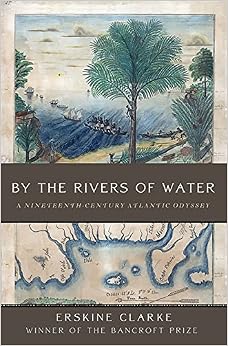
By the Rivers of Water: A Nineteenth-Century Atlantic Odyssey, by Erskine Clarke

PDF Download By the Rivers of Water: A Nineteenth-Century Atlantic Odyssey, by Erskine Clarke
In this age of modern period, using net need to be made the most of. Yeah, web will aid us quite not only for essential point however additionally for daily activities. Lots of people now, from any degree could use internet. The resources of internet link could also be enjoyed in many locations. As one of the advantages is to obtain the online book, as the globe window, as lots of people suggest.
If a publication from popular author exists, at some time numerous fans of them will straight buy guide. Even any type of book types, but are they actually checking out guide? Who knows? Hence, we will certainly show you a publication by acquainted writer entitled By The Rivers Of Water: A Nineteenth-Century Atlantic Odyssey, By Erskine Clarke This publication will provide you some advantages if you really read it. The very first is you could obtain the new words as exactly what we have unknowned concerning it previously. We could additionally boost the foreign language from reading this book. There are any kind of.
No, we will share you some inspirations about exactly how this By The Rivers Of Water: A Nineteenth-Century Atlantic Odyssey, By Erskine Clarke is referred. As one of the analysis publication, it's clear that this book will certainly be absolutely executed substantially. The related subject as you need now ends up being the man aspect why you ought to take this book. Additionally, getting this book as one of reading products will certainly boost you to acquire even more info. As recognized, even more details you will obtain, more updated you will be.
This By The Rivers Of Water: A Nineteenth-Century Atlantic Odyssey, By Erskine Clarke ends up being an enhance in your planning for far better life. It is to had to get guide to get the best seller or best writer. Every publication has particular to make you feel deeply regarding the message and also impact. So, when you discover this publication in this website, it's far better to obtain this publication quickly. You can see how a simple book will provide powerful perception for you.
From Publishers Weekly
In 1834, a devout newlywed couple sailed from their native Georgia for Liberia to spread the Gospel. Most missionaries to Africa died, but the couple survived and persevered, working tirelessly if not always successfully to do good and returning to America in 1852, where their antislavery views did not prevent them from supporting the South as the Civil War loomed. Despite his subjects' unimaginable piety, Clarke (Dwelling Place), professor emeritus of American religious history at Columbia Theological Seminary, clearly admires John Leighton Wilson and his wife Jane. Hoping to educate as well as convert, they studied indigenous tribes, tried to understand native cultures, and treated those they encountered as equals. This contrasted ironically with thousands of freed black Americans who were persuaded to return to Africa during this period. These freemen considered themselves superior to the natives whom they misunderstood, brutalized, and exploited—exactly as white European settlers treated American Indians. An original history that tells the engrossing story of two white missionaries and their often stormy relations with their mostly black fellow countrymen, against the background of America descending into Civil War. 30 b&w illus., 7 maps. (Oct.)
Read more
From Booklist
In 1832, a young missionary couple, both born and bred in the southern aristocracy, set off to Liberia, where a colony of freed slaves had recently settled. John Leighton Wilson and his wife, Jane, had inherited slaves of their own and faced the dilemma of what to do with them before sailing off to save souls in Africa. Writing from the perspectives of white missionaries and African Americans (enslaved and freed) as well as Africans, historian Clarke offers a complex portrait of the countervailing forces of the nineteenth century as America grappled with the profound contradictions of slavery. The missionary zeal to convert Africans to Christianity often lacked basic respect for them as humans, and the motivation of the colonizing societies often had more to do with ridding America of blacks than liberating blacks from slavery. The Wilsons spent two decades in West Africa, learning the language and customs and confronting their own biases as well as the contradictions they saw in the colony, witnessing racial and ethnic turmoil as vile as that under American slavery. Their story is one of good intentions and cruel consequences, and the enigma of human freedom in the midst of slavery and the contingencies of human life. --Vanessa Bush
Read more
See all Editorial Reviews
Product details
Hardcover: 488 pages
Publisher: Basic Books; 1 edition (October 8, 2013)
Language: English
ISBN-10: 0465002722
ISBN-13: 978-0465002726
Product Dimensions:
6.5 x 1.5 x 9.5 inches
Shipping Weight: 1.6 pounds (View shipping rates and policies)
Average Customer Review:
4.8 out of 5 stars
10 customer reviews
Amazon Best Sellers Rank:
#858,024 in Books (See Top 100 in Books)
By the Rivers of Water is a stunning piece of research written with literary elegance by Erskine Clarke. Anyone with roots in South Carolina, anyone who has interest in the early work of the Presbyterian missionaries, anyone who can trace their ancestry back to West Africa or has interest in the history of West Africa, or anyone who wishes to better understand the culture of slavery in the South would find this book to be a must read. I for one, happen to fit into all of those categories. Upon finishing reading Clarke’s book I found myself needing to just sit and be still in an effort to let it sink in chapter by chapter. There are so many things to consider and challenge our pre-conceptions of right and wrong and good vs. bad. The book will be with me for a long time to come.
In addition to By the Rivers of Water being a compelling story, it is a very important book about human nature and the power that cultures and environments have upon it. It also brings much understanding of the Atlantic Highways of the 19th century, race relations, slavery, missionary activity, and the Civil War. Erskine Clarke has a very sensitive and engaging style of writing. - Douglas M. Carpenter
This book complements both American Tapestry and Warmth of Other Suns, through a rich and detailed account of the influence of slavery, colonization and the missionary movement on 19th century American social and economic history.
The author described the book very well and I would recommend it to anyone interested in the time period before and after the Civil War. Descriptions of the slave trade were surprising to me.
In 1836, John Leighton Wilson and his wife Jane Bayard volunteered to serve as missionaries in West Africa. Both were from prosperous southern families and both owned slaves. Yet, as staunch Presbyterians, they felt it was their duty to bring Christianity to Africa. They first went to Maryland in Liberia, a settlement of free blacks from the United States. The settlement was backed by the American Colonization Movement whose purpose was to aid free African Americans to return to Africa. The Colonization Movement was not an Abolitionist Movement; rather their goal was to maintain Maryland's `whiteness'.The purpose of the Missionary Societies, however, was to minister to the African peoples. When friction arose between the settlers and the native Africans, Leighton found himself often in the middle of the frey but his sympathies were almost always on the side of the native Africans. The African Americans had absorbed western values which often clashed with those of the native Africans, especially on issues like land and property rights.The Wilsons wished to free their own slaves. However, under Georgia law, if a slave was freed, they had to leave the state. Many slaves were married to others on other plantations and, if they left, they would have to leave their families behind. The decision was finally made to allow the slaves the choice. They could come to Liberia, move to another state, or choose to remain a slave but with the option to take their freedom later. Most chose to move to Liberia.Underneath the Wilsons' actions, however, was a strong seam of racism. When problems arose in Maryland in Liberia, for example, they blamed it on the fact that the Colonization Movement had appointed a `coloured man' as governor. Later, when they were forced to return to the US for health reasons, they opposed the Southern demand for the reintroduction of the international slave trade but considered the election of Abraham Lincoln a sign of northern aggression against the south. When the southern states seceded and Fort Sumter was fired on signaling the beginning of the Civil War, they returned to Georgia to support the Confederacy. When the southern Presbyterian churches decided to also secede from the north and to put forward their declaration that slavery was not in opposition to the word of God, Leighton was one of the signers. Despite his opposition to the international slave trade, Leighton believed that southern whites 'understood' African Americans and their needs and that it should be left up to the southern states to decide how best to deal with the issue of slavery without interference from the north.By the Rivers of Water is a beautifully crafted history of the times with all of its contradictions. Author Erskine Clarke is a Theological historian and he handles all of these contradictions with sensitivity. He recognizes that the people about whom he writes were products of their time while never apologizing for their actions or beliefs. For anyone with an interest in history, this is an elegantly written, well-researched and well-documented portrayal of an important period in American history.
Right off the bat I want to say that this is a 5 star book. I've never seen or read anything like it. Seriously, it's almost a new genre. It is a history book; it's a missionary biography; it's micro-history; it's expansive history. I've read a lot of missionary biographies; I've read a lot of history books; but I've never read the two genres so closely intertwined.Clarke wrote a densely-written, historical account of the missionary endeavors of John Leighton and Jane Wilson into West Africa. That's the framework of the book, but it is also an historical documentation of the African-American colonies in Liberia and Gabon, the Gullah people on the coast of Georgia, the beginnings of African-American churches in South Carolina, and an historical look at the Atlantic highway in the years immediately preceding and during the Civil War. Absolutely fascinating.Leighton and Jane both came from large plantation and slave owning families in the deep south. This is their story of how they came together, and how Jane established schools in Africa, while Leighton fought the International Slave Trade and colonization, and translated portions of the Bible into Grebo and Mpongwe. However, when the Civil War started Leighton and Jane moved to the south to stand with their family.The author takes Leighton to task for departing from his moral vision after the Civil War. I probably would have cut him more slack. Given the fact that Leighton's family were plantation owners, he had to overcome a lot of cultural biases against going to Africa in the first place. Schools and reading were against the law for slaves, yet he gave his life to those tasks. I guess we all wish that the Civil War didn't produce so much bitterness in the aftermath.This book shows incredible scholarship and documentation. Nearly every paragraph references letters, books, historical societies, Colonization Papers, court records, archives of churches, etc.Highly recommended.Pages: 378, plus 50 pages of documentationAuthor: Erskine ClarkePublished: Basic Books, October 2013
By the Rivers of Water: A Nineteenth-Century Atlantic Odyssey, by Erskine Clarke PDF
By the Rivers of Water: A Nineteenth-Century Atlantic Odyssey, by Erskine Clarke EPub
By the Rivers of Water: A Nineteenth-Century Atlantic Odyssey, by Erskine Clarke Doc
By the Rivers of Water: A Nineteenth-Century Atlantic Odyssey, by Erskine Clarke iBooks
By the Rivers of Water: A Nineteenth-Century Atlantic Odyssey, by Erskine Clarke rtf
By the Rivers of Water: A Nineteenth-Century Atlantic Odyssey, by Erskine Clarke Mobipocket
By the Rivers of Water: A Nineteenth-Century Atlantic Odyssey, by Erskine Clarke Kindle


0 komentar: