
Free Download Youth Ministry in the 21st Century: Five Views (Youth, Family, and Culture), by Chap Clark Fernando Arzola Jr.
- elonoremerleannickwyatt
-
 Minggu, 24 Agustus 2014
 -
 0 Comments


Free Download Youth Ministry in the 21st Century: Five Views (Youth, Family, and Culture), by Chap Clark Fernando Arzola Jr.
This publication is actually conceptualized to provide not only the recent life however likewise future. By using the advantages of this Youth Ministry In The 21st Century: Five Views (Youth, Family, And Culture), By Chap Clark Fernando Arzola Jr., perhaps it will lead you to not be question of it. Be one of the terrific viewers in the world that always review the top quality book. With the qualified books, you could hone your mind as well as thought. This is not only concerning the viewpoint; it's about the fact.
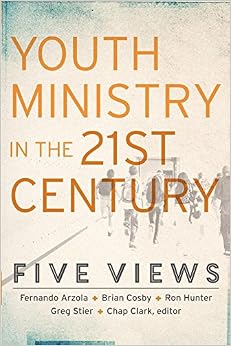
Youth Ministry in the 21st Century: Five Views (Youth, Family, and Culture), by Chap Clark Fernando Arzola Jr.

Free Download Youth Ministry in the 21st Century: Five Views (Youth, Family, and Culture), by Chap Clark Fernando Arzola Jr.
How to win the challenges that always compel you to function rarely? Obtain the motivation, more experiences, even more methods, and a lot more expertise. And also where is the area to get it? Naturally, numerous places ready institutions as well as lots of points are good teacher for you. And also book, as the window to get open up the world becomes one of the choice that you should obtain. What type of publication? Of course the book that will certainly support related to your requirement.
Reading is type of have to do each day. Like what you do your everyday tasks, eating or doing your daily activities. And now, why should be reading? Checking out, once more, can assist you to find brand-new way that will get you to life much better. That's not exactly what you call as the obligation. You can review Youth Ministry In The 21st Century: Five Views (Youth, Family, And Culture), By Chap Clark Fernando Arzola Jr. in the spare time as additional tasks. It will not additionally obligate you to read it for numerous web pages. Just, by steps and you could see just how this publication interestingly.
This is not just about the excellences that we will certainly use. This is also concerning what points that you can interest in making far better concept. When you have various concepts with this publication, this is your time to satisfy the impacts by reading all web content of the book. Youth Ministry In The 21st Century: Five Views (Youth, Family, And Culture), By Chap Clark Fernando Arzola Jr. is additionally among the home windows to reach as well as open the globe. Reading this publication could help you to find brand-new globe that you could not discover it previously.
We share you likewise the means to obtain this book Youth Ministry In The 21st Century: Five Views (Youth, Family, And Culture), By Chap Clark Fernando Arzola Jr. without going to the book store. You can continuously see the link that we offer and also all set to download and install Youth Ministry In The 21st Century: Five Views (Youth, Family, And Culture), By Chap Clark Fernando Arzola Jr. When many individuals are active to look for fro in the book store, you are quite easy to download the Youth Ministry In The 21st Century: Five Views (Youth, Family, And Culture), By Chap Clark Fernando Arzola Jr. right here. So, exactly what else you will opt for? Take the inspiration here! It is not just giving the appropriate book Youth Ministry In The 21st Century: Five Views (Youth, Family, And Culture), By Chap Clark Fernando Arzola Jr. yet likewise the best book collections. Below we constantly provide you the very best and most convenient means.
From the Author
Chap Clark - This is an important book, for there are many voices today that seem to offer "the" way to think about and "do" youth ministry, but often they seem to contradict. In Youth Ministry in the 21st Century: Five Views the five contributors present their "view" on youth ministry, the others respond, and then the contributor offers a final rejoinder. While remaining cordial, the back-and-forth produces an honest, straightforward conversation between proven leaders and thinkers regarding this vital ministry. Our invitation to the reader is to join in the conversation to determine what it is you believe about youth ministry, why, and how it should be practiced.In my view, the "Adoptive View," I argue that youth ministry disconnected from the final trajectory of inclusion into the local "household of faith" is not youth ministry. One of the most common metaphors for God's gathering is "family," and the Apostle Paul, then, uses the term "adopted" to describe how we all by faith are brought into this family. So adoptive ministry, to follow Paul's framework, is where we as God's household live into what God declares is true in Christ (John 1:12). So older generations are not to be seen as "surrogate grandparents" or "aunties," but rather children and teenagers, and everybody else, must see their value and thus relate to one another as siblings. This provides children and adolescents - and any disconnected population - the twofold inclusive community they long for and need: a family where each one is nurtured and guided toward maturity, and at the same time a community where they are encouraged and empowered to participate in the work of the kingdom of God. Ron Hunter - The goal for the D6 portion of Youth Ministry in the 21st Century: Five Views is to show how church and home work in a complimentary fashion. This does not describe an integrated model but rather one where each age ministry builds on and connects with the others. Deuteronomy 6 commands parents to take the lead in the spiritual development of their kids. Youth pastors, children's ministers, and especially the lead pastors are vital to transforming the church into a family ministry culture. Every minister and ministry work toward generational discipleship so that it could be said of your family, He is the God of Abraham, Isaac, & Jacob!
Read more
From the Back Cover
In Youth Ministry in the 21st Century, Fernando Arzola, Greg Stier, Ron Hunter, Brian Cosby, and Chap Clark present the major contemporary views on youth ministry. They also respond to one another's views, helping readers develop their own approach to youth ministry."Teenagers need thoughtful, theologically grounded youth leaders more than ever. Youth Ministry in the 21st Century asks the right questions and helps leaders devise innovative responses. It's a new day in youth ministry, and the insights contained in these pages will lead us all toward more transformative ministry. Together."--Kara Powell, Fuller Youth Institute"As youth ministry models continue to develop and evolve, we all need to submit our closely held models to that beautiful process of iron rubbing against and sharpening iron. In the end, God will have made us all better for it! That's what happens in this thought-provoking book. This grace-filled, five-way conversation is powerful and challenging. Not only will it force you to evaluate and adjust your own model of ministry, it offers a model for how to generously and humbly 'talk amongst yourselves,' particularly with those with whom you don't agree."--Walt Mueller, Center for Parent/Youth Understanding"When I read a book by Chap Clark, I know I'm going to read a book that is thoughtful, theologically sound, and pulsing with the heart of a youthworker. And Youth Ministry in the 21st Century, with its iron-sharpening-iron approach, demonstrates Chap at his best, challenging us to think beyond our favorite youth ministry strategies to consider theological roots, ministry implications, and practical outcomes. You'll be pushed and pulled a bit in this book, but I'm confident these stretching exercises will only make your ministry stronger."--Duffy Robbins, Eastern University"I love this book. I felt like I was in a room listening in on an incredible dialogue with some of the finest thinkers in the field of youth ministry. All these youth specialists are brilliant and have a deep love for young people. There is something to learn on every page and from every viewpoint."--Jim Burns, HomeWord Center for Youth and Family, Azusa Pacific University
Read more
See all Editorial Reviews
Product details
Series: Youth, Family, and Culture
Paperback: 224 pages
Publisher: Baker Academic (August 18, 2015)
Language: English
ISBN-10: 9780801049675
ISBN-13: 978-0801049675
ASIN: 0801049679
Product Dimensions:
6 x 0.6 x 9 inches
Shipping Weight: 12.6 ounces (View shipping rates and policies)
Average Customer Review:
4.4 out of 5 stars
9 customer reviews
Amazon Best Sellers Rank:
#614,930 in Books (See Top 100 in Books)
Some people don't like these Views books, but I just love them. He best thing about them is hearing someone else's view from their own mouth (pen? keyboard?) and not from someone else's summary of their position.I was really forced to think through some philosophy of ministry things in my own ministry to the youth at my church. I have been challenged to sharpen things and be more deliberate and explicit in goals and methods.
I expected something else, more of a "how to" and I didn't get that from this book.
Good job.
Five contributors, five views, five counter-responses per view, but only one shared concern: How to reach out the the youths of the 21st Century better and more effectively? Inspired by a 2001 book published under the title "Four Views of Youth Ministry and the Church," the intention is to update the views as our world becomes more complex. Instead of going forth to present another model, there is a shift toward a firmer footing on theological considerations. Instead of simply the "what" and the "how" of doing youth ministry, the view is about the "why" and "where" of application. We are living in a world of newer challenges. Instead of having young people coming into our churches, we have an era where young people are leaving churches in droves. We have the rise of the Nones. The five academics, practitioners, and authors agree about the need for "theological, psychosocial, and ecological grounding" for the work of youth ministry. Greg Stier (Gospel Advancing View) is founder and president of Dare 2 Share ministry which focuses on equipping youths to do evangelism, out of which discipleship would flow. Fernando Arzola (Ecclesial View) as Associate Professor of religion at Nyack College sees formal teaching as the key strategy for nurture and discipleship of youths. Ron Hunter (Family Focused View) is director of Randall house as well as the Director of the D6 Conference. Brain Cosby (Reformed Youth View) is Lead Pastor of Wayside Presbyterian Church and visiting professor at Reformed Theological Seminary. General editor, Chap Clark (Adoption Model) is Professor and Chair of the youth, family, and culture department at Fuller Theological Seminary.The first view is Greg Stier's "Gospel Advancing View" which basically believes that Jesus himself was a youth leader! The ones called to change the world are all youths. The goal is not evangelism but nurture of teenagers who would do the work of witnessing and the sharing of the Word. It is essentially discipleship where the vital elements are: 1) equipping for relational ministry; 2) sharing of stories; 3) persistent gospeling activities at youth meetings; 4) empowering and focusing on the 10%; 5) gospeling everything; 6) Prayer. Criticisms come fast and furious leaving Stier to acknowledge that his model while is high on the "go" portion, may be deficient in the "grow" aspect.The second view is Brian Cosby's "Reformed View" which seeks to put youth ministry under the umbrella of distinctively reformed theological doctrines via the "means of grace" of prayer, Word, sacraments, service, and gospel community. Faithfulness is more important than success. If the Bible provides the "content and method," the means of grace provide the how to go about youth ministry. The criticisms tend to be about the overwhelming slant toward Reformed theology in an increasingly nondenominational world; the danger of disconnecting the church from the youths if one was to shove theological content down the throats of the young; doctrinal polarizations; etc.The third view is Chap Clark's "Adoption View" which believes that we need a community of faith to raise a young in faith. He goes through a historical overview from Mike Yaconelli's experiment model to Doug Field's Purpose Driven Youth Ministry. He cites Mark Senter III's three statements about youth ministry which make a lot of sense. 1) Youth Ministry begins when adults enter in; 2) Youth Ministry happens when adults help the young to mature in Christ; 3) Youth Ministry ceases when the adult-youth discipleship relationship breaks down. The idea of a family adoption model shows us that youths do not grow on their own. They need an interested adult or mature spiritual person to guide them. The responses are gracious and humble as the other respondents applaud many things learned from Clark. Some have even added new dimensions to understanding the adoption model! Clark then summarizes his view as "inviting our young into the calling, life, and work" of the kingdom.The fourth view is Fernando Arzola's "Ecclesial View" tries to put youth ministry back under the purview of the Church. The concern is that modern youth ministries tend to be separated from the main church ministries and are in danger of missing out on the rich history and traditions of the church. The Orthodox perspective needs to be reappropriated, not abandoned. Youth Ministry must includes the four creedal characteristics: 1) Oneness; 2) Holiness; 3) Catholicity; 4) Apostolic. Thus, youth ministry is less about entertainment but ecclesiastically grounded. While heavy in theology, the criticisms are on the practical aspects of how. In response, Arzola maintains that the lack of applications should not undermine the focus on theological grounding.The fifth view is Ron Hunter's "D6 View" which is short for Deuteronomy 6. The key emphasis is for parents and teachers to consistently teach, model, and build relationships with the young, a form of generational discipleship. It is a team effort. Parents must be coached to be coaches. Students need "vital concepts, character building, and biblical values." Parents are the primary spiritual caregivers. If Arzola is heavy on theology, Hunter's view is heavy on family focus.So What?========Each view has both strengths and weaknesses. The responses of each contributor to each proposed view are rich and varied. Like iron sharpening iron, not only did the five authors learn from one another, they helped nuance the complexity and the changing needs of youth ministry. Readers can benefit from the academic, the practical, the issues, and the historical lessons we can learn from. Although the editor has explained the exclusion of other prominent youth experts like Doug Fields and Kara Powell, I still believe that there is room for a sixth view. A dedicated website has been set up for readers to check out as and when there are updates.Youth ministry remains one of the most, if not the most, challenging ministries in any Church. Sadly for some, this segment has largely disappeared. Some churches bring in "superstar youth pastors" and some passionate volunteers to run the ministry. Others use big budgets, sophisticated programming, but still find it challenging to cultivate spiritual maturity among the youths. The goal of this book is not to convince us of any one view, but to provide five basic ingredients for us to learn of, so that we can discern and develop a combination that is appropriate for our congregations. I believe that this book is needed for at least three reasons. First, youth ministry is big. Just because the youth departments of many churches are not growing does not mean that there is a shrinking youth population. There will always be young people. We must not forget that children will eventually grow up, and when they do, will there be a ministry that can help them grow? Second, youth ministry is complex. A pastor friend of mine tells me that youth ministries need to be re-invented every two years. While I may dispute the exact number of years, I would concur with the need to look at re-inventing ourselves regardless of whether the tool is working or not. With a complex youth ministry, there is lots of room for five different views, even more. The range of options available to us will suddenly become broader. For youth ministers and volunteers, this book will give a good overview of the different views so that they can have maximum number of resources available for their use. Third, youth ministry is vital. This cannot be over-emphasized as the young will form the leadership core for all of our churches. There is no running away from aging. Even the most faithful and fervent leaders will grow old. The gifted will gradually age and fade away. What remains will be those who have been discipled in Christ. This book is not about whether we agree with all, with some, or with none of them. It is about being humble enough to acknowledge that youths all over the world are important. We need one another. Thanks to the five authors, readers will benefit from the plethora of knowledge and experience that the Church so badly needs.Rating: 4.75 stars of 5.conradeThis book is provided to me courtesy of Baker Academic and Graf-Martin Communications in exchange for an honest review. All opinions offered above are mine unless otherwise stated or implied.
I am a youth pastor, which means that the Lord has given me the privilege of ministering to a group of bright, knowledgable, confused, hormonal, and impressionable people known as teenagers. As we find ourselves ministering to this group of people in such a different age known as the 21st-century, what is the best way of going about reaching them?It is in response to this question that a new book has been written: Youth Ministry In The 21st Century: Five Views. The book is edited by Chap Clark, and includes contributions by the editor, Fernando Arzola, Brian Cosby, Ron Hunter, and Greg Stier. Each of these men has had a substantial time of their life devoted to youth ministry, and therefore they each have wisdom and experience from which to speak.The PurposeFrom the introduction, Clark says that the purpose of the book is that each of the contributors would "advocate for their own convictions and perspectives on what ministry to adolescents essentially is. Our desire is to offer five relatively unique voices and perspectives on the basics and foundation of what youth ministry should be about now and in the coming decades" (xiv).The ViewsSo what are the five views represented?1. Greg Stier — The Gospel Advancing View of Youth Ministry. In essence, Steir argues the the central and primary focus of ministry to youth is evangelism. Everything else that the ministry does should be serving this one ultimate purpose of evangelism.2. Brian Cosby — The Reformed View of Youth Ministry. Cosby argues that we are to use "the blueprint of biblical methodology" that we find in Scripture in our youth ministry. And what is that "blueprint"? Using the means of grace — God's Word, prayer, sacraments, service, and gospel community — to minister to teenagers and incorporate them into the life of the body of the church.3. Chap Clark — The Adoption View of Youth Ministry. Clark argues that the primary focus of the youth ministry should be adoption into the family of faith. He says: "I contend that the primary reason we have lost so many of the hearts and investment of our young when they leave the confines of the high school routine is that we have failed to provide them with the most vital resource they possessed in Christ: the God-given faith community" (75).4. Fernando Arzola — The Ecclesial View of Youth Ministry. Arzola writes as one who desires youth ministry to focus less on contemporary matters and more on understanding their places within the larger communion of saints, particularly in the context of church history. Therefore, he sees the need for youth ministry is to recover the 4 credal characteristics of the church: The Church is One, Holy, Catholic, and Apostolic. He sees the need of the day for youth ministry as being reconnecting youth to their roots and having a better understanding of church history and tradition.5. Ron Hunter — The D6 View of Youth Ministry. Hunter, the Found of D6 (short for Deuteronomy 6), argues for intentional "generational discipleship lives out through both the church and the home" (148). He sees the youth pastor's role as threefold: (1) Teach and minister to the youth; (2) Train and equip the parents; and (3) Work closely with the leaders of other age-specific ministries in the church to develop a consistent and comprehensive process of training and discipling children and young adults in the church.My ThoughtsSo which "view" did I think was the best? Honestly, there was good stuff in all 5 of them. I would say that the view that I found myself saying the most "Amens" while reading was Brian Cosby's Reformed View (followed closely by Ron Hunter's D6 view). My least favorite view was Fernando Arzola's Ecclesial View.In Cosby's chapter, he reflects on a statistic that tells of that 3 out of 4 American teenagers claim to be Christians, and most are affiliated with a religious organization in some way. However, only half consider it very important, and fewer than half actually practice their faith as a regular pat of their faith. So what should we do about this reality? Cosby comments:This is where the importance of method comes to the forefront. How do we get these bored, purposeless, yet (self-professing) 'religious' teens not only into the church but also into a sustainable, Christ-treasuring faith? Many churches have turned to competing with the world to woo and attract them by all sorts of gimmicks and giveaways. But is this the method that God has given us to draw young people into a relationship with him, or are we supplanting the God-ordained means by which he does that work of saving and sanctifying?" (40).The answer is that this is not the method that God has given us, and it is supplanting the God-given means of saving and sanctifying — the Word of God, prayer, sacraments, service, and community. These are the things that the Lord has given us to use in our ministry, for it is through these things that the Lord has promised to save and sanctify.ConclusionOverall, there was quite a lot of agreement between the 5 contributors. Rather than there being a lot of disagreement, there was instead just a difference in emphasis. All of the contributors agreed that a number of things were vital for a successful and faithful youth ministry — Intergenerational discipleship, parental training, evangelism, quality and substantial Bible teaching vs. entertainment, etc. Where the difference seemed to lie, then, was a matter of emphasis.Overall, I thought the book was only mildly helpful. It was interesting to read the 5 different articles, and then the responses to each view by each contributor. It felt like I was watching an extended panel between 5 experienced youth ministers. However, it felt sometimes like they were arguing about nothing. What I mean is that there seemed to by so much agreement and consistent emphases between all of them that what it really came down to was a matter of emphasis, not actual disagreements.I appreciated the book, definitely took some things away from it, and was stretched and challenged in some areas. But I suspect it will be one of those books that will now get added to my shelf and never picked up again. If you are a youth pastor, or training to be one, it may be a helpful book for you to pick up, but I wouldn't say it's an essential one.In accordance with FTC regulations I would like to thank Baker Academic for providing me with a review copy of this book in exchange for a fair and honest review.
5 ways to keep youth plugged in: http://bit.ly/1Nam1Yq
Bible college recommended
An excellent way to assess and design where Youth Ministry is and where it is headed for hiring.
Youth Ministry in the 21st Century: Five Views (Youth, Family, and Culture), by Chap Clark Fernando Arzola Jr. PDF
Youth Ministry in the 21st Century: Five Views (Youth, Family, and Culture), by Chap Clark Fernando Arzola Jr. EPub
Youth Ministry in the 21st Century: Five Views (Youth, Family, and Culture), by Chap Clark Fernando Arzola Jr. Doc
Youth Ministry in the 21st Century: Five Views (Youth, Family, and Culture), by Chap Clark Fernando Arzola Jr. iBooks
Youth Ministry in the 21st Century: Five Views (Youth, Family, and Culture), by Chap Clark Fernando Arzola Jr. rtf
Youth Ministry in the 21st Century: Five Views (Youth, Family, and Culture), by Chap Clark Fernando Arzola Jr. Mobipocket
Youth Ministry in the 21st Century: Five Views (Youth, Family, and Culture), by Chap Clark Fernando Arzola Jr. Kindle


0 komentar: